
Welcoming Sita Bakhrel to the Good Health Nepal Board of Directors
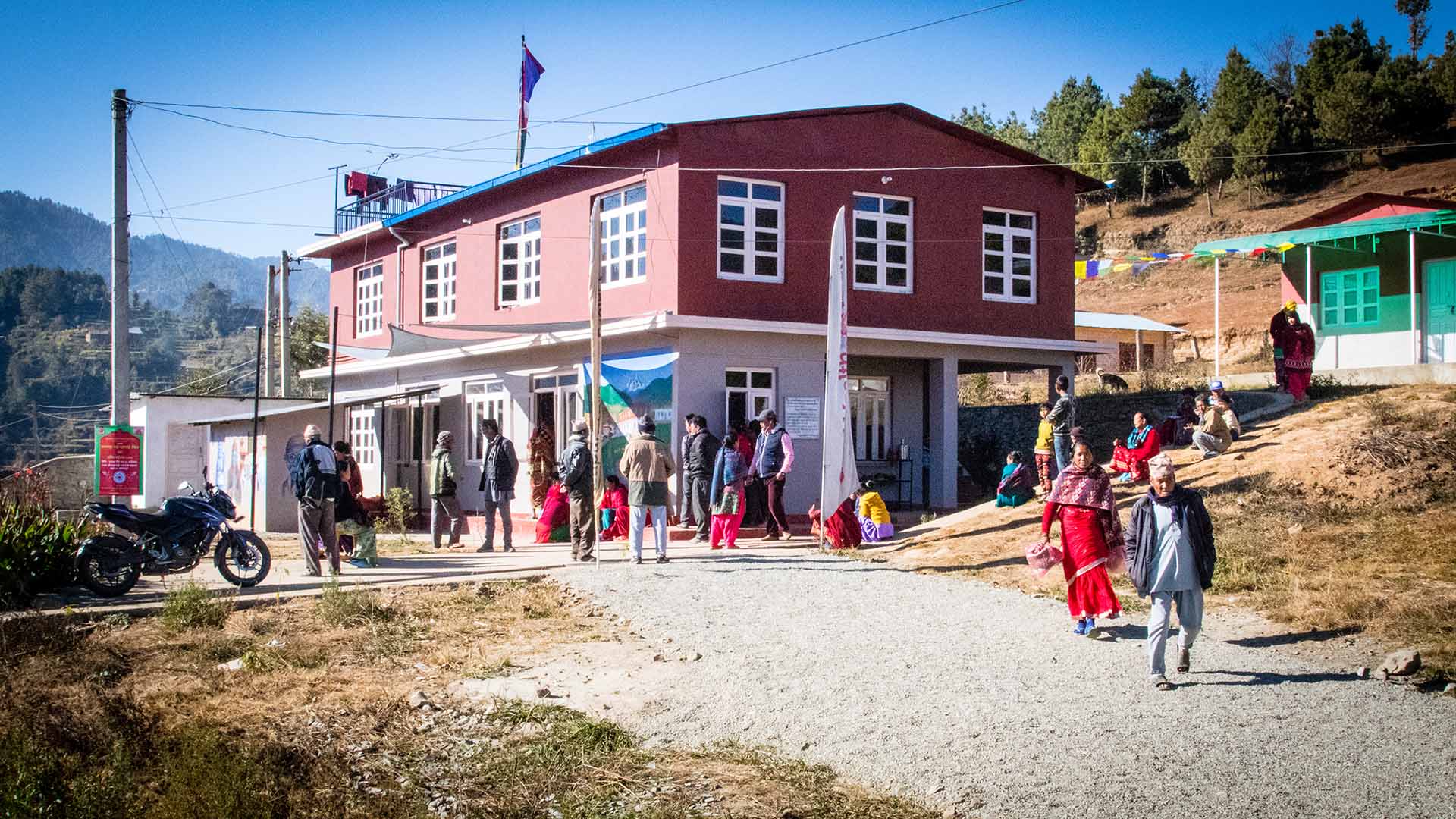
I first met Sita Bakhrel in 2017 in Bajrabarahi when I was serving as team lead for Acupuncture Relief Project (ARP) outreach camps. ARP President Andrew Schlabach had been there before me, training three interns from the Rural Health Education and Service Center (RHESC) in Kathmandu, and asked me to continue their training once he returned to the U.S. In addition to Sita, we were working with graduates Sarita Khatri and Boorish Janakraj.
Those months were focused on continuing fundamental training that included point location, taking vitals, understanding diagnosis, and learning why screening for noncommunicable diseases (NCDs) is essential in rural primary care.
At that time, I didn’t know that Sita’s relationship with ARP and our sister organization, Good Health Nepal, was going to grow into something so important in shaping the work we do today.
First Encounters with ARP/GHN
Sita describes her time as a student at RHESC in Kathmandu: “I first became connected to ARP/GHN in 2013 in our college with Andrew [Schlabach, USA] and Tsering [Sherpa]. At that time, we had a 2 day shoulder anatomy class. I didn’t understand [Andrew’s] English because I was from a government school, but Tsering was helping us as an interpreter.”

Despite the language barrier, the experience left a lasting impression on Sita: “From that time, I have been a big fan of [Andrew’s] teaching skills and have continued attending the training sessions he offers. [In 2016 and 2017], we had a chance to go to the Bhimphedi camp and did internships from the Bajrabarahi clinic.”
Learning What Care Really Means

What inspired Sita to continue was not only the clinical training, but the way care was delivered. She was impressed with how the project genuinely focused on treating people with dignity, listening to what they needed and providing real and lasting care. “During my internship everyday I learnt something new from volunteers, mentors, and especially from the patients themselves. ARP/GHN is the true inspiration of my life and it helped me learn that care is more than just providing treatment. Most importantly I continue to be inspired by our Andrew Sir.”

Growing into Leadership
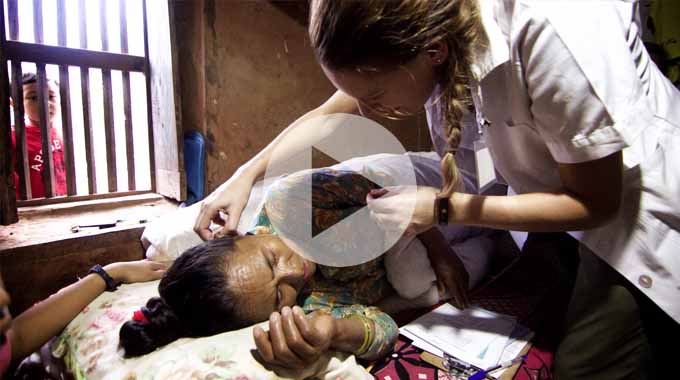
Today, Sita serves on the Board of Directors of Good Health Nepal (GHN) as Treasurer and works as Coordinator for Acupuncture Relief Project, bridging local leadership with international partnership. Her responsibilities span administration, governance, education, and clinical care.
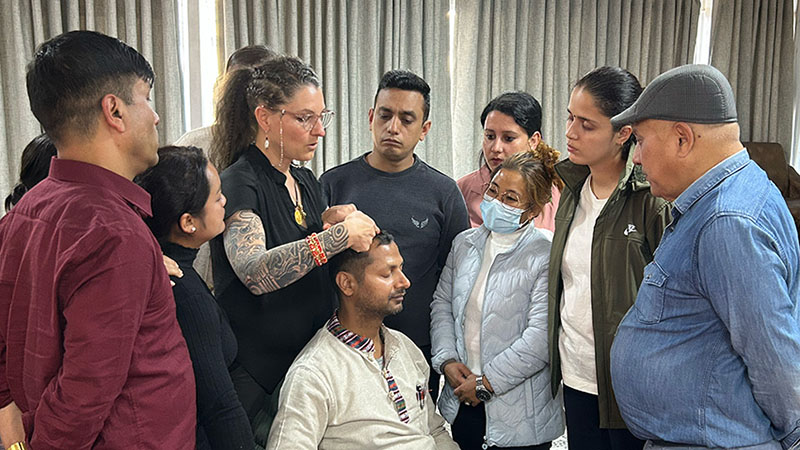
“I am mainly focused on paper work with different local governments and co-ordinating the foreign volunteers. In addition to that, I am continuing with a Masters degree in Psychology and working part-time with patients to understand their concerns, educate and support them with their diagnoses and give them acupuncture treatments.”
Transforming Community Health
One of the most meaningful shifts for Sita has been how she understands community health, particularly through the development of ARP/GHN’s Healthy Lifestyle Clinic approach. “I’ve learned that healing isn’t only about techniques; it’s about kindness, proper treatment planning, diagnosis, patience, and being present.”
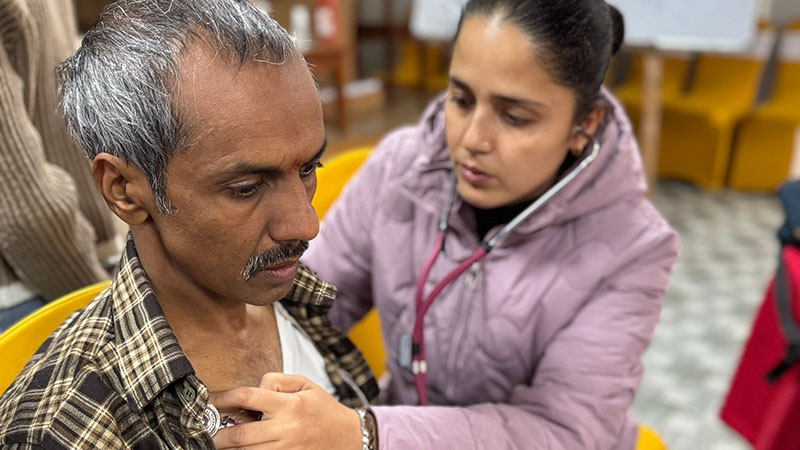
Through her work at free health camps in rural districts of Nepal, she has seen how comprehensive, acupuncture-based primary care stands out among other healthcare models. “Whenever I work with other health care professionals (like the free camps through Kyimolung Foundation Nepal and Elevate Nepal) they were really surprised by [the quality of] my work and praised me. ARP/GHN has made me more compassionate and more confident in my career. I am always grateful for ARP.”
What Healing Really Is
When asked about moments that stay with her, Sita returns again and again to the idea that “many people in rural Nepal don’t just come to the clinic for medicine. They come for care, respect, and hope. ARP has taught me that healing is not only about techniques; it is about connection, trust, and treating every person with dignity.”
She also names a challenge that often goes unseen. “Many people may not realize how much emotional support we provide in addition to physical treatment.”
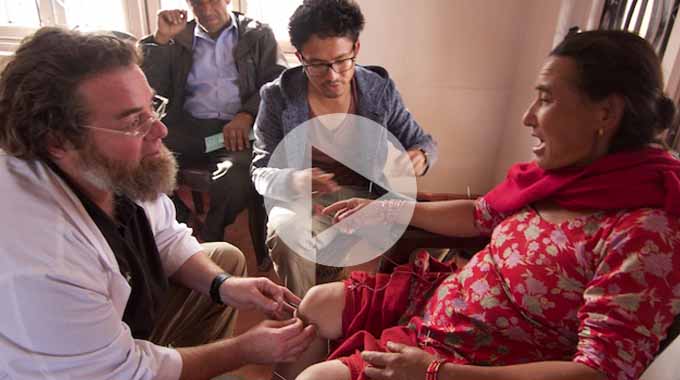
In Nepal, she explains, most patients arrive with multiple chronic conditions and high expectations for immediate results. This makes education essential. “Some people don’t realize [the frequency and duration that is needed with acupuncture] and they think it is similar to analgesic drugs,” so educating them about how the therapy works is necessary for patients to get the most from treatment. It’s also important that we help patients understand what acupuncture will and will not work for and that we understand how to refer up the care ladder when that’s needed.
From Introvert to Educator
I didn’t see Sita in person again until 2024, in Kathmandu, at a class she had organized for Andrew Schlabach and me to teach. Andrew taught orthopedics and NCD screening; I reviewed respiratory anatomy and NCDs affecting the lung and some scalp acupuncture techniques.
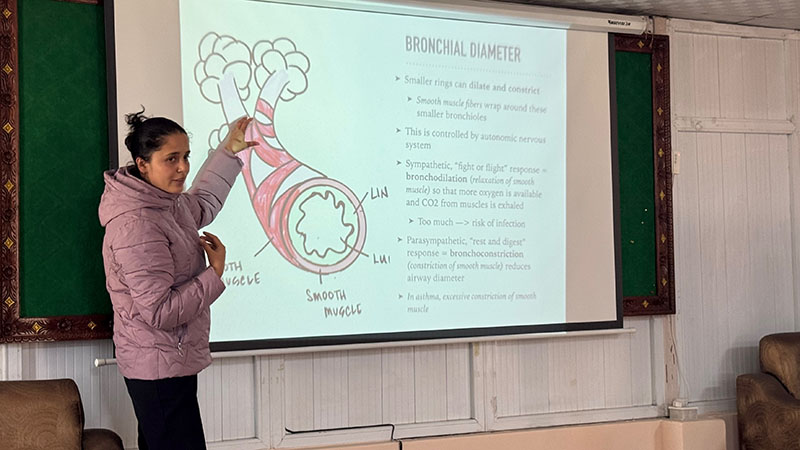
Sita has often described herself as an introvert, telling me she struggled with her confidence. Yet, after I gave a lecture on the difference between asthma and COPD, I asked Sita if she would come up and re-teach the material in Nepali using my slides. She hesitated, shy to leave her chair, but once she stood at the front of the room, it was clear she was exactly where she belonged.
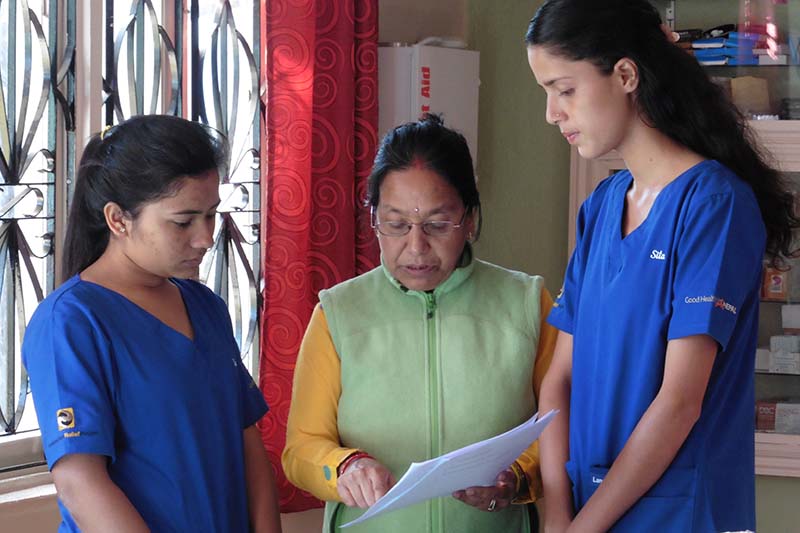
When I asked her about that, she reflected said, “I overcame these challenges slowly, through practice, mentorship, and patience. I learned to listen more, observe more, and ask for guidance when needed.”
Primary Care as Community Work
Sita’s understanding of primary care has fundamentally changed through this work. “I’ve learned that primary care is not just first contact. It’s long-term connection, education, and empowerment.”
Her message for volunteers coming from abroad: “Primary care in Nepal is not just medical work. It is community work.”
Patients often walk hours to reach care, carrying physical illness alongside emotional and financial burdens. “Even small improvements, like listening with patience, giving clear advice and offering reassurance, can make a huge difference in their lives.”
Gratitude and the Road Ahead
Sita expresses deep gratitude to her teachers, mentors, and family.
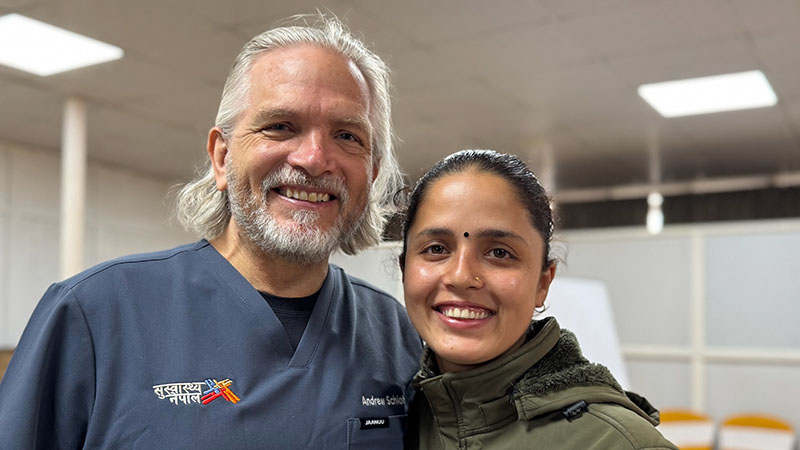
“I’m deeply grateful to my teachers, especially Andrew Schlabach, Tsering Sherpa, Manju Dahal and Bex Groebner, my parents and all the respected teachers who helped me in my studies and motivated me when I was felt down. I’m thankful to the patients who trust us with their health. They teach me every day.”
We are honored to welcome Sita Bakhrel to the Board of Directors of Good Health Nepal and deeply grateful for the leadership she brings; as a clinician, educator, coordinator, and advocate for compassionate, community-rooted primary care. Her path reflects exactly what ARP and GHN exist to support: locally led healthcare, grounded in dignity, education, and long-term relationship. -- Bex Groebner